Anti-Bullying Lesson Plan 2018: Peer Pressure
Anti-Bullying Week 2018 ‘Choose Respect’ will be unfolding from 12th November. And we’ll be visiting Primary schools throughout the UK with Anti-Bullying Workshops and Performances.
We took some time to create Anti-Bullying Lesson Plans to support our visits to the schools. For Anti-Bullying Week 2018 the OpenView Education Team has produced interactive Anti-Bullying videos to support the teaching of Anti-Bullying topics.
Try out the Anti-Bullying Lesson Plan below with your class:
Learning Outcomes:
-
Students will discuss bullying as a group behaviour.
-
Students will understand the impact of peer pressure on a bullying situation.
-
Students will discuss their own experiences of peer pressure.
Teaching The Lesson:
Introduction: 15 minutes
Ask your students:
-
What do you understand bullying to be?
-
Who can give me an example of a bullying situation?
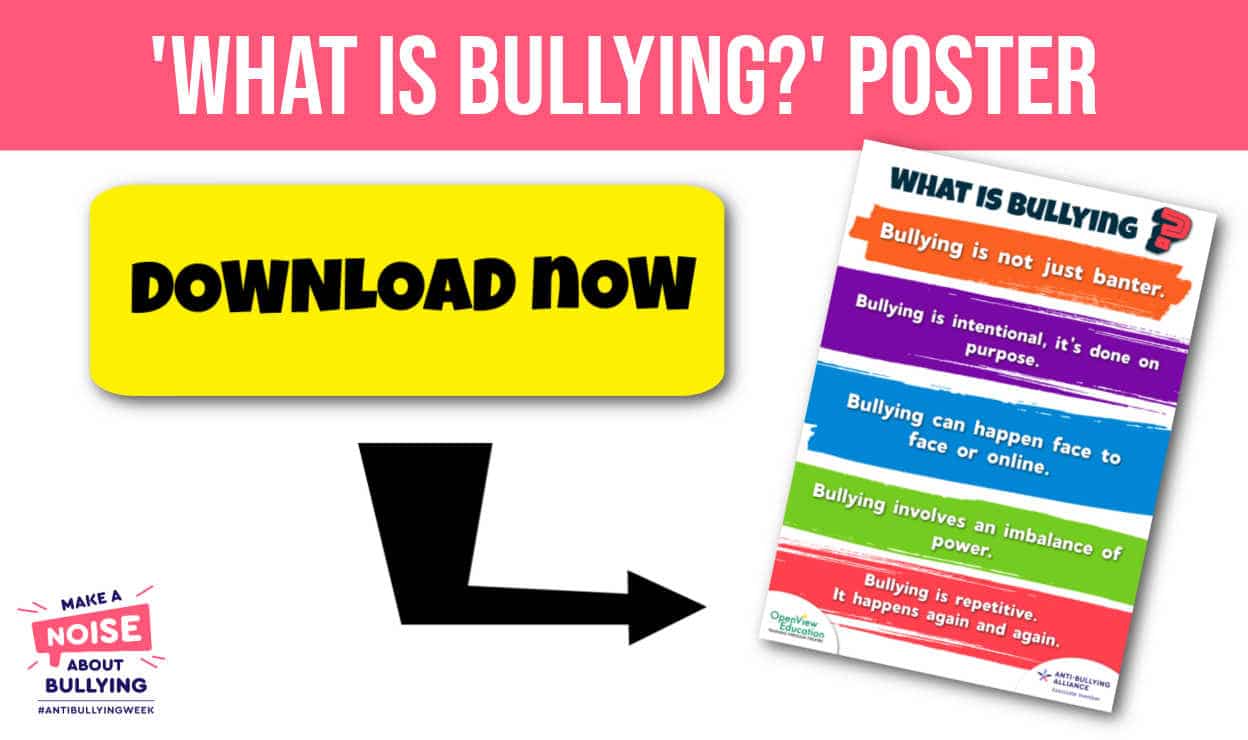
Explain to your students the definition of bullying:
‘Bullying is the repetitive, intentional hurting, of one group or person, by another group or person, where the relationship involves an imbalance of power. It can be face to face or online.’
You can place this video from the Anti-Bullying Alliance to support this definition as well.
Check students understanding of this definition. If you feel it’s necessary go through each of the following words and ask your students explain what these words mean to them:
· Intentional.
· Repetitive.
· Imbalance of power.
Create a MindMap – 15 minutes
Write the words ‘Peer Pressure’ in the middle of the board. Ask your students to have a discussion in small groups or with a partner about what they understand from the phrase ‘Peer Pressure’.
Get the attention of your group and ask students to give their ideas. Create a MindMap of suggestions. This point may provide a good opportunity for students to discuss their own experiences of peer pressure.
Watch Video: ‘Anti-Bullying: What Is Peer Pressure’ & Discuss: 20 minutes
Play the first part of the video below. Pause the video when instructed to do so.
Discuss with your students what they think Milly would do. Ask them:
-
What would you do in this situation?
-
What would happen if Milly joined in?
-
Students have been regularly saying unkind things about Philip, is this bullying even though he didn’t hear it?
Once you have finished the discussion play the final part of the video.
Discuss with your class:
-
Did Milly make the right choice?
-
What can we do if we feel peer pressure?
-
What would you have done in this situation?
Conclusion:
Talk to your students about the ‘Choose Respect’ them for Anti-Bullying Week 2018.
‘We can always choose how we behave. Even though students were pressuring Milly to bully Philip, she chose to treat him with respect.’
I hope you found this Anti-Bullying Lesson Plan useful. Let us know what you thought at @openviewed.
We offer a range of Workshops and Performances for Schools. Including Internet Safety Workshops, and World Book Day Workshops.