From working in person with hundreds of schools each year, we understand the challenges that schools face around TikTok, that’s why we have created this short TikTok guide for parents and carers. It outlines the steps that parents can take to help keep their children safe while using TikTok.
What are the risks of TikTok?
Inappropriate Content
On the iOS store TikTok is rated at 12+ and on Google Play store it is rated as ‘Parental Guidance Recommended’. Most of the videos uploaded to TikTok are light-hearted dance videos. However because the content on the platform is user generated, it’s possible for content of any kind to be uploaded. This means it’s impossible to control what will be shown in the ‘For you’ feed when a user logs in. There have been videos on TikTok that have been reported for featuring drug and alcohol abuse, self-harm and sexual content. As is the case on most social media platforms, it’s also possible for cyberbullying to take place on TikTok. This may be through the comments, reactions or Duet feature on the platform. We cover this topic more in our anti-bullying workshops that we deliver in schools.
Inappropriate Music
The majority of videos uploaded to TikTok are short form dance videos, it’s possible that some of the songs may feature explicit language.
Strangers Online
As with most social media platforms, TikTok makes interacting and communicating with others easy. It’s possible to comment, react and download other users content. A recent change means that for users aged 13 – 15, the default setting on their account is private. However it is possible to change this to public. Because there are a lot of young people using the platform, the platform is prone to use by online predators.
Compulsive Design
Social Media platforms are created to be addictive. TikTok is highly engaging and entertaining, but this also means it can be difficult to come away from the platform. A user can also receive likes and reactions from the videos that they have uploaded. Social feedback of this kind can be very addictive; encouraging users to upload and interact more.
In-App Purchases
There is also the option of purchasing TikTok Coins. TikTok Coins can be used to purchase emojis within the app that retain the monetary value. These Emojis can then be sent to other users on TikTok to reward them for the videos that they have created. TikTok have created a policy that only allows users over the age of 18 to purchase TikTok Coins.
Safety Steps for Parents
Start a conversation
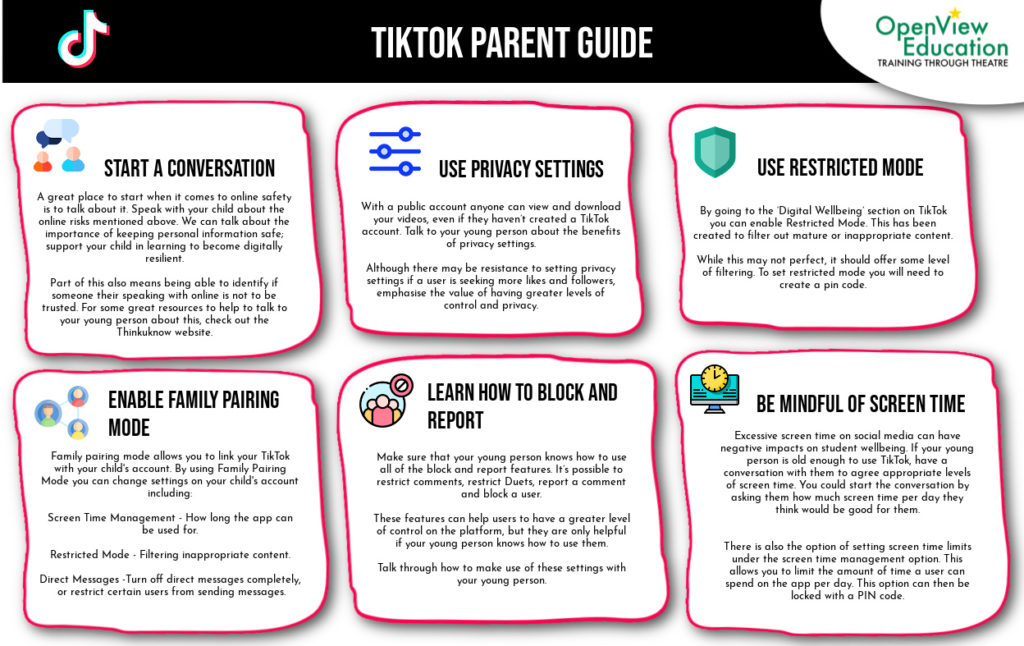
A great place to start when it comes to online safety is to talk about it. Speak with your child about the online risks mentioned above. We can talk about the importance of keeping personal information safe; support your child in learning to become digitally resilient. Part of this also means being able to identify if someone their speaking with online is not to be trusted. For some great resources to help to talk to your young person about this, check out the Thinkuknow website.
Use Privacy Settings
With a public account anyone can view and download your videos, even if they haven’t created a TikTok account. Talk to your young person about the benefits of privacy settings. Although there may be resistance to setting privacy settings if a user is seeking more likes and followers, emphasise the value of having greater levels of control and privacy.
Use Restricted Mode
By going to the ‘Digital Wellbeing’ section on TikTok you can enable Restricted Mode. This has been created to filter out mature or inappropriate content. While this may not perfect, it should offer some level of filtering. To set restricted mode you will need to create a pin code.
Enable Family Pairing Mode
Family pairing mode allows you to link your TikTok with your child’s account. By using Family Pairing Mode you can change settings on your child’s account including:
- Screen Time Management – How long the app can be used for.
- Restricted Mode – Filtering inappropriate content.
- Direct Messages -Turn off direct messages completely, or restrict certain users from sending messages.
Learn How to Block and Report
Make sure that your young person knows how to use all of the block and report features. It’s possible to restrict comments, restrict Duets, report a comment and block a user. These features can help users to have a greater level of control on the platform, but they are only helpful if your young person knows how to use them. Talk through how to make use of these settings with your young person. Find full instructions here.
Be mindful of Screen Time
Excessive screen time on social media can have negative impacts on student wellbeing. If your young person is old enough to use TikTok, have a conversation with them to agree appropriate levels of screen time. You could start the conversation by asking them how much screen time per day they think would be good for them. There is also the option of setting screen time limits under the screen time management option. This allows you to limit the amount of time a user can spend on the app per day. This option can then be locked with a PIN code.
At OpenView Education we visit schools regularly to support them in delivering internet safety education in our online safety workshops. If you would like to arrange an e-safety workshop for your school, get in touch here.