The mental health charity YoungMinds have created a new report about how the coronavirus pandemic has impacted the mental health and wellbeing of young people. This is the fourth report that they have released and it shows that the covid-19 pandemic continues to have a detrimental effect on the wellbeing and mental health of young people.
Respondents from the research said that in this lockdown they experienced an increased sense of isolation and diminished optimism about their future prospects. There was also mention of the freezing weather disrupting routines and the pressure of home learning.
However, not all young people in the survey supported rapid easing of restrictions. Many were concerned about facing another lockdown, there was a feeling that most of all they wished for an end to the cycle of freedoms being taken away by further restrictions.
There have also been some welcome changes in response to the mental health crisis that young people face. Such as the £8 million Wellbeing in Education Return Fund that will be used to provide a training programme for colleges and schools, helping them to improve how they respond the emotional impact of coronavirus pandemic on their students and staff.
So what where the findings in the most recent YoungMinds research?
The study took place between 26th January and 12th February 2021. During a new phase of lockdown when schools and colleges were closed to most students.
2,438 students aged between 13 – 25 took part who have a history of mental health needs during the coronavirus pandemic:
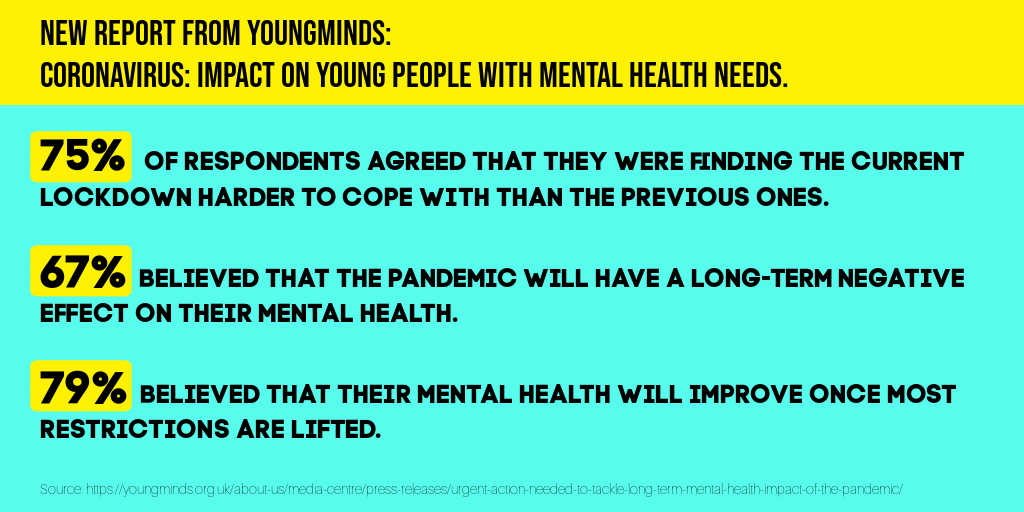
When respondents where asked ‘What were the main pressures in the current lockdown?’ The most frequent answers were:
1. Loneliness and isolation.
2. Concerns about school, college or university work.
3. A breakdown in their routine (not being able to do what they normally would.)
48% of the respondents who were in schools or colleges said that they didn’t think their school was focusing more on wellbeing than usual.
Although the negative impacts of the coronavirus are clear from the findings above, some young people in the research also sighted positive impacts. Some of the young people said that they had received support with their mental health and because of this, they found the lockdown easier to manage.
One young person said:
“I’ve started doing more self-care during this lockdown and made sure I’m looking after my mental health and physical health. In the first lockdown I struggled a lot but I’ve now learnt how to manage my mental health better and found what works for me.”
It’s inspiring to see that when young people have strategies that they can use to take care of their mental health and wellbeing, this can make a significant difference to their experience. Raising student awareness around mental health, and providing skills and strategies for taking care of our wellbeing can make a measurable difference to students.
That’s why at OpenView Education, our mental health and wellbeing workshops focus on providing students with new skills for taking care of their wellbeing. But we don’t stop there, we want to support the schools that we work with to take a whole school approach to wellbeing. That means valuing everyone’s mental health; teachers, parents, carers, volunteers and school staff.
We’re creating a new online wellbeing programme full of high quality resources to help schools achieve this. We will be sharing more information about this soon!
This recent report from YoungMinds adds to a growing body of evidence about the impact of the coronavirus pandemic on young peoples mental wellbeing. You can read the full report here.